Old Park
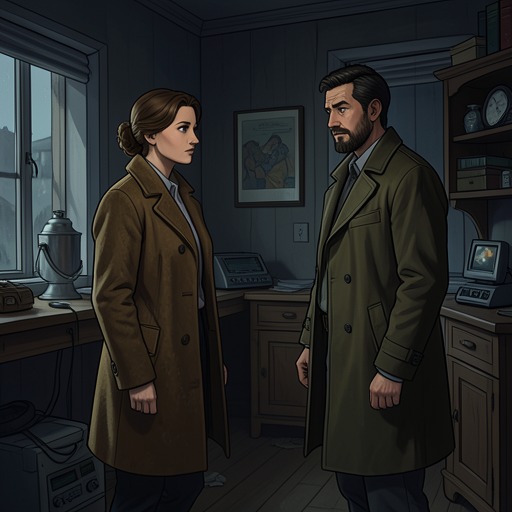
Winter in SokchoOld Park is the proprietor and working manager of a two-building guest house in Sokcho, a place defined by winter vacancies, improvised hospitality, and the pressure to remain in business. He is shown both enforcing the routines that keep the establishment running and offering wordless care when the narrator is overwhelmed. His role is therefore practical rather than grand: he maintains a fragile lodging business while becoming one of the people through whom the narrator’s distress is noticed and contained.
The Guest House and Its Precarious Business
The guest house consists of a main building and a second structure reached through a long alley. The main building holds the reception, kitchen, visitors’ lounge, and guest rooms on two floors; its orange and green corridors are lit by bluish bulbs. Behind it stands a restored traditional house on stilts, with two rooms, heated floors, paper dividing walls, a courtyard, a frozen fountain, and a bare chestnut tree. Old Park’s establishment is absent from the guidebooks. Its guests instead arrive by chance, sometimes after drinking too much or missing the last bus, a marginal kind of custom that suits a business outside the usual tourist routes.
The lodging operates through detailed, ordinary instructions. When the computer freezes and Old Park is not present, the narrator takes the French guest through the information he would normally give: breakfast hours, what is included, where to leave laundry, the Wi-Fi password, the nearby twenty-four-hour convenience store, the bus stop, and the distance to Seoraksan National Park. The specificity of this routine makes hospitality visible as work, not merely welcome. Even the recommendation to bring boots for snow, followed by the reminder that Sokcho offers little to do in winter, places the guest house within a seasonal economy that Old Park cannot control.
That economy has worsened since Old Park’s wife died the previous year. With few guests in winter, he has closed the upstairs bedrooms; once the narrator’s and Old Park’s rooms are counted, the occupied rooms are all taken, and Yan Kerrand is lodged in the separate building. Later, new hotels near the bridge sharpen the threat. Old Park says he will need a loan to finish renovating the first floor before summer because the guest house will not survive otherwise. The prospect of borrowing ties the building’s upkeep to a narrow deadline: renovation is not simply improvement, but a condition of continuing to operate amid new competition.
Work, Rules, and Authority
Old Park’s management is expressed through requests and corrections as much as through the rooms themselves. He asks the narrator to make red-bean tteok, and when she explains that she had taken a day off, he insists that she should still have cleaned the Japanese climber’s room in case new guests arrived. The rebuke comes against the reality of slow business, making the exchange a small collision between the labor he expects and the narrator’s awareness that the guest house is hardly overwhelmed with bookings. His authority depends on keeping routines in force even when the surrounding circumstances make them seem excessive.
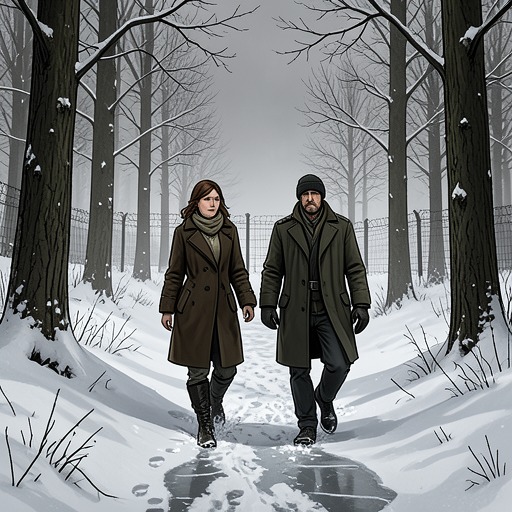
He also takes part in arranging Yan Kerrand’s proposed trip to the Korean border. The bus can go only as far as the vehicle checkpoint, and reaching the observation point in no man’s land requires a private car. Old Park calls a rental agency; when the agency says that a French licence will not do and an international licence is required, the plan stalls. The narrator offers to drive Kerrand herself. Old Park agrees on the condition that the rooms are done first. In this moment he helps turn a guest’s request into a feasible outing, while keeping the guest house’s work obligations in view.
His attention to the narrator and Kerrand is less formal. Almost two weeks after Kerrand’s arrival, Old Park watches the narrator from behind the counter and appears to have noticed that she treats the French guest differently from the others. Kerrand is often away, leaves his door open, and gives the narrator a view of his discarded sketches when she cleans his room meticulously. Old Park’s watchfulness places their growing, largely unspoken connection within the shared space of the guest house: he observes a change in the narrator’s behavior, though the evidence does not make him a confidant or spell out what he concludes.
Care in a Moment of Collapse
Old Park’s most direct act of care comes after the narrator, carrying sausage from her mother, eats frantically in the kitchen and then vomits bile onto her thighs. The scene is physical and exposed: she is crouched on the floor, her hair spread over her face, when a green neon light comes on in the corridor and Old Park enters. He looks at what has happened, puts his arms around her, pats her shoulder as if comforting a baby, and wraps his coat around her. Without speaking, he leads her back to her room.
The gesture is not presented as a cure or as an explanation of the narrator’s distress. Its force lies in its plainness and sequence: he sees, covers, and guides her away. Earlier, Old Park’s attention has often taken the form of work-related oversight—rooms, guests, renovations, and the conditions of a trip. Here the same presence becomes shelter. The coat is a practical object turned into immediate protection, and his silence leaves the narrator’s crisis unjudged in the moment described.
Narrative Role
Old Park links the guest house’s public routines to the narrator’s private vulnerability. Breakfast instructions, room assignments, cleaning expectations, and renovation plans establish a daily world governed by labor and limited resources; the kitchen collapse reveals that this world also contains gestures of unannounced tenderness. His wife’s death and the threatened survival of the business make him part of the novel’s winter atmosphere of loss and uncertainty, while the arrival of competing hotels gives that uncertainty a concrete economic shape.
He is neither only a stern employer nor simply a benevolent caretaker. The correction over the missed room shows his insistence on work even during a quiet season; his agreement to help with the border journey shows practical flexibility; and his response to the narrator’s collapse shows care without explanation. These strands remain together. Old Park’s significance comes from the way he sustains a place that is itself precarious, and from how, within its ordinary routines, he notices the narrator at the moment she can no longer manage herself.